1
Live product on a custom domain
3
Setup packages defined to test willingness to pay
1
Unified workflow for listings, requests, reserved items, and sold states
0
Buyer signup required
Portfolio update
Work in progress
Please note that some case studies are still being refined, but here's a sneak peek.
Turning my own move-out sale into a product experiment for private local selling.
Mooving started from a real personal need: managing a move-out sale without relying on public marketplaces or fragmented chats. I defined the product direction, designed the UX/UI, and led front-end delivery.
The product combines a validation landing page, a link-only sale page, and a lightweight admin workflow for listings, requests, offers, and sold states.
1
Live product on a custom domain
3
Setup packages defined to test willingness to pay
1
Unified workflow for listings, requests, reserved items, and sold states
0
Buyer signup required
Work Type
Independent Project
Industry
Local commerce / move-out sales
Role
Founder / Product Designer / Front-End Developer
Scope
Product Strategy / UX/UI Design / Front-End Delivery / Workflow Design / Validation Funnel
Core Stack
Nuxt 3 / Vue.js / Tailwind CSS / Firebase / Firestore / Storage / Resend / Vercel
Tools
GSAP / Google Analytics 4 / Vercel Web Analytics / Google Search Console
AI Support
TypeScript / Server routes and integrations / Debugging and QA iteration / Workflow refinement
Duration
2026 (3 weeks)
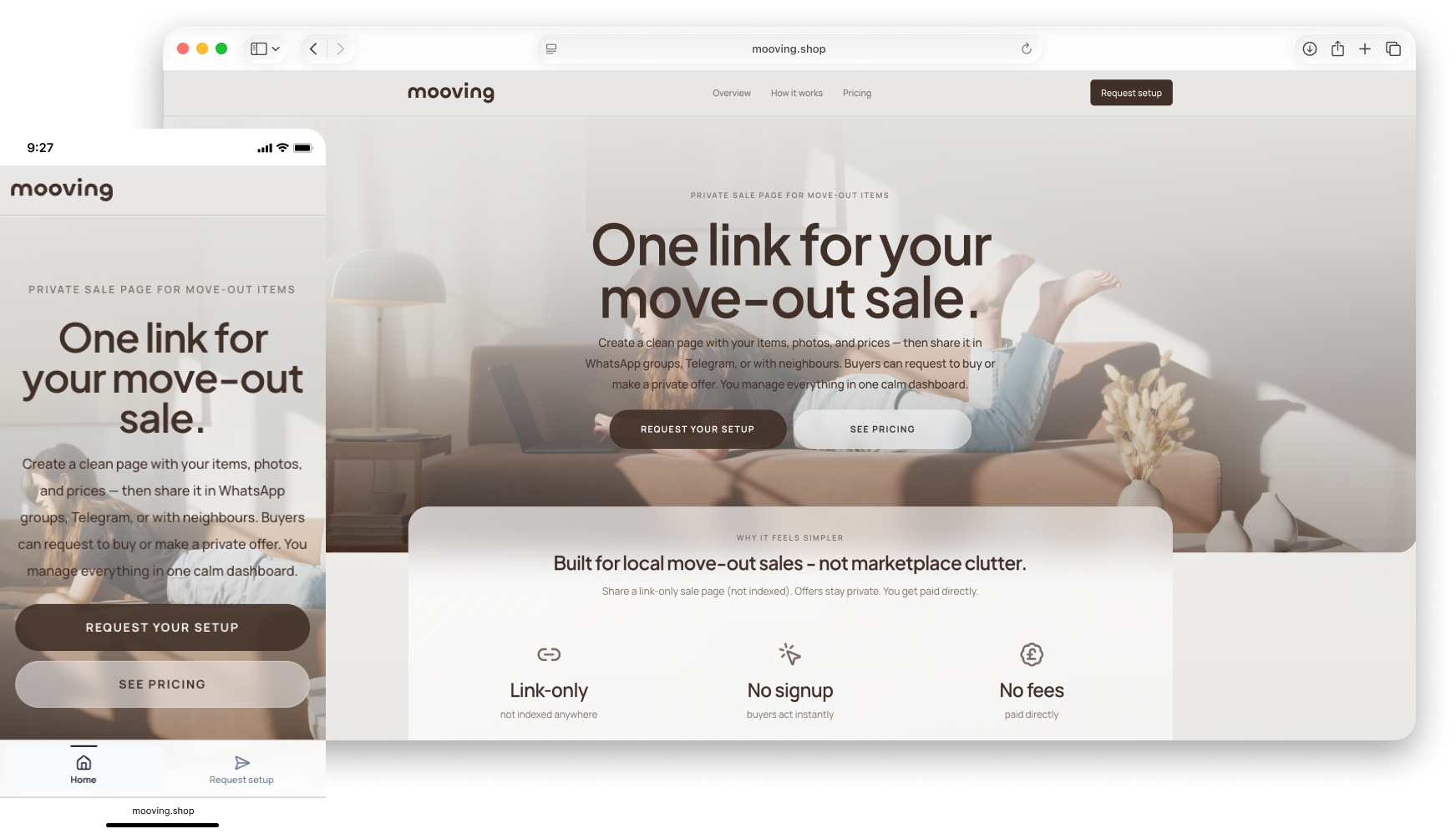
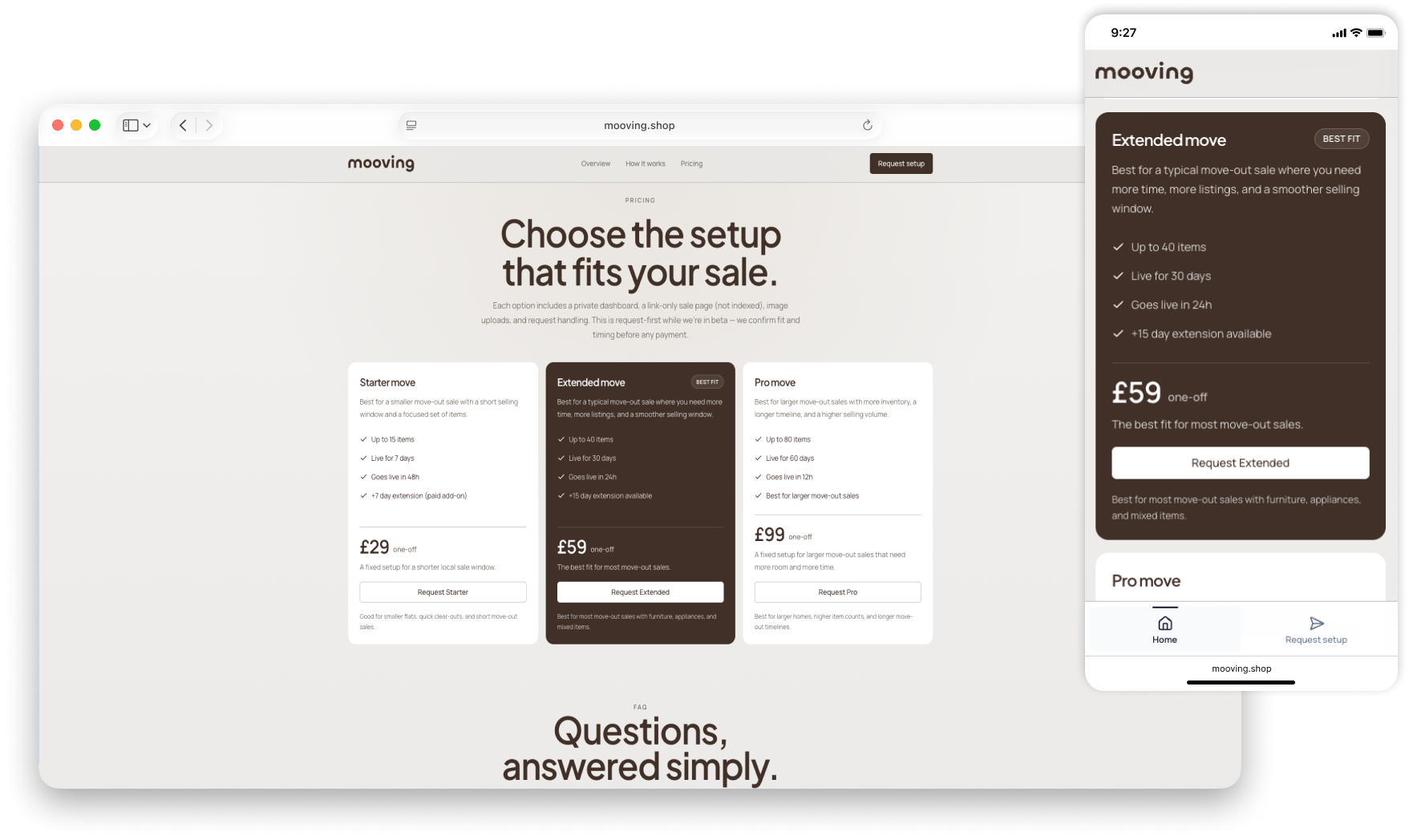
Mooving separates product validation from the live sale experience: the public site explains the offer, pricing, and setup model, while the private sale workflow gives sellers one clean link to share and one calm dashboard to manage interest.
A validation-first platform combining landing, pricing, setup request, sale-page browsing, and seller operations.


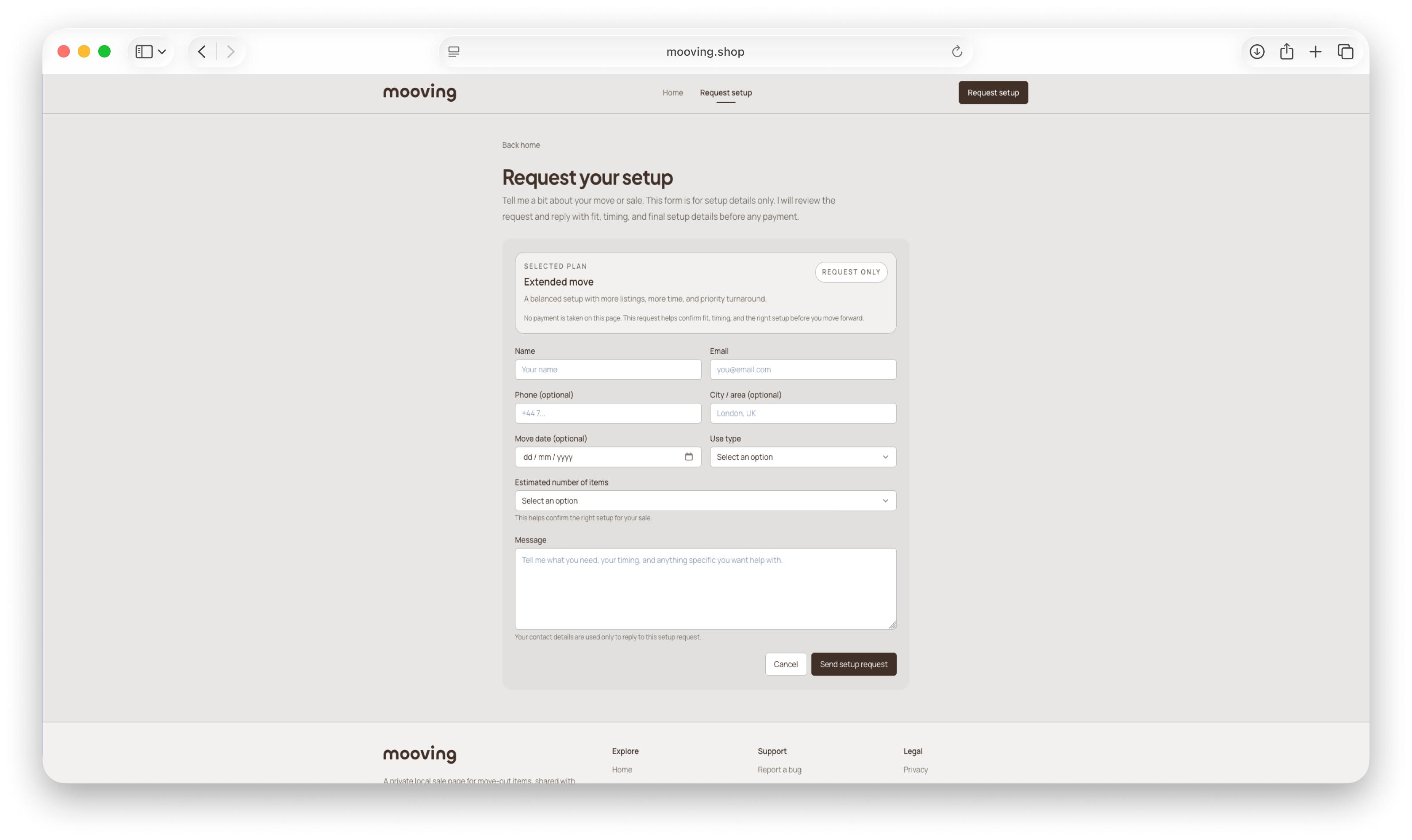
The request form keeps validation simple: plan, timing, item volume, and context are captured before any payment or setup work begins.
The seller side stays lightweight but structured, giving one place to manage listings, monitor requests, and keep item states clear during the sale.


I needed a system that reduced message fragmentation, avoided marketplace clutter, and made it easier to handle real requests without losing track of availability. At the same time, I wanted to explore whether this pain point was specific to me or a repeatable product opportunity for other sellers in the same situation.
Selling move-out items locally is messy when information, buyer interest, and decisions are spread across chats and public marketplaces.
Because the project came from my own move-out sale, prioritization stayed strict: reduce message fragmentation, keep the sale private, and build only enough workflow to handle real listings, buyer intent, and availability states.
The strongest insight was that privacy and control mattered more than marketplace reach.
Instead of building a large marketplace, I focused on the smallest credible system that could solve the problem end to end: a landing page for validation, a private sale page for buyers, clear request states for the seller, and enough infrastructure to support trust, analytics, and email communication.
I treated Mooving as an MVP-first product experiment grounded in real operational use.
The product stays lightweight for buyers but structured for sellers: listings are easy to create, item states are explicit, and requests can be handled without turning the experience into a noisy marketplace.
Several product and UX choices were made deliberately to keep the experience calm, credible, and realistic at MVP stage.
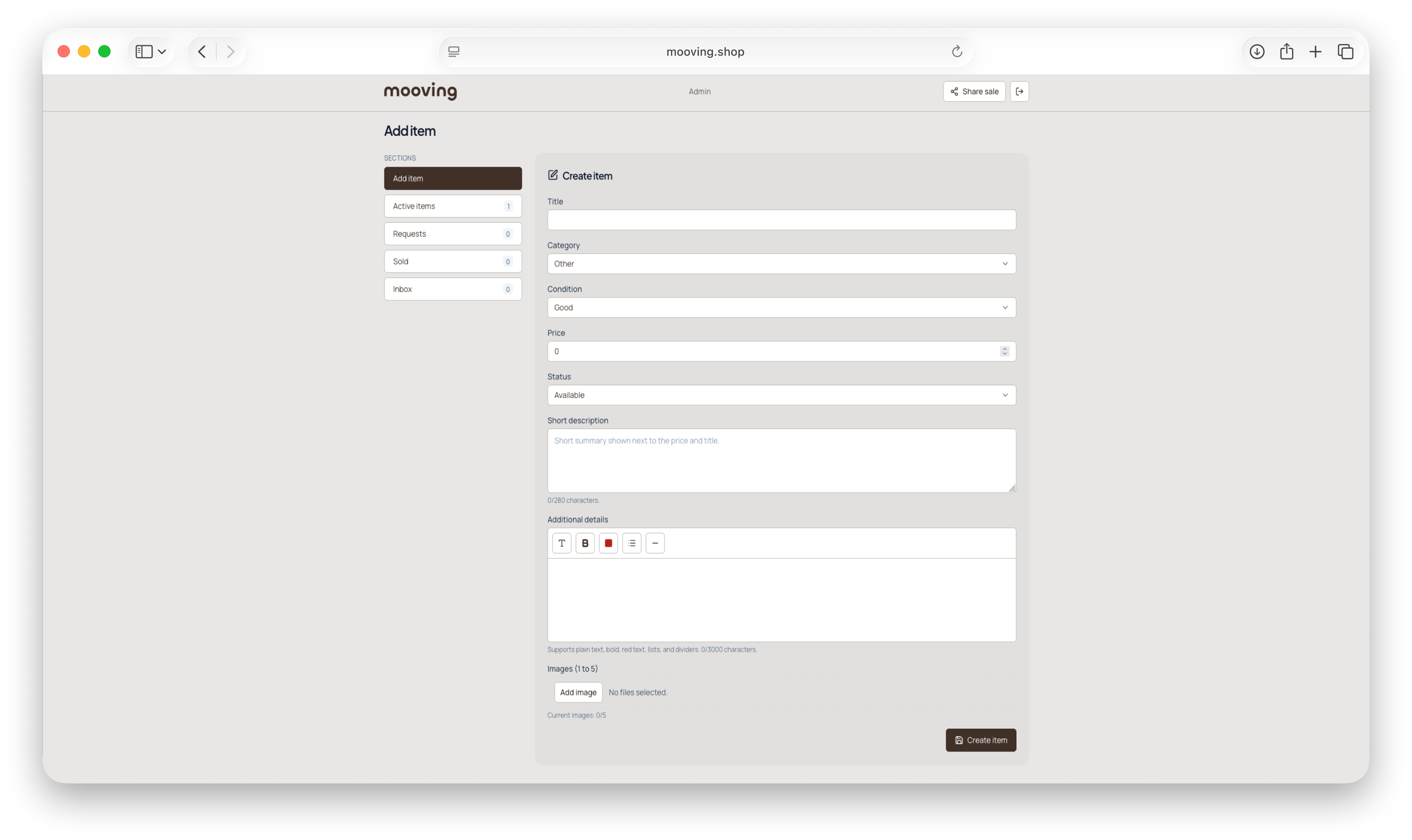
Category
Structured categories keep mixed household items easier to browse and manage.
Condition
Condition is captured upfront so buyers know what to expect before sending a request.
Availability State
Explicit item states help the seller move from available to reserved or sold without losing track.
Images and Details
Photos, short descriptions, and extra notes reduce repetitive buyer questions and make listings more credible.